
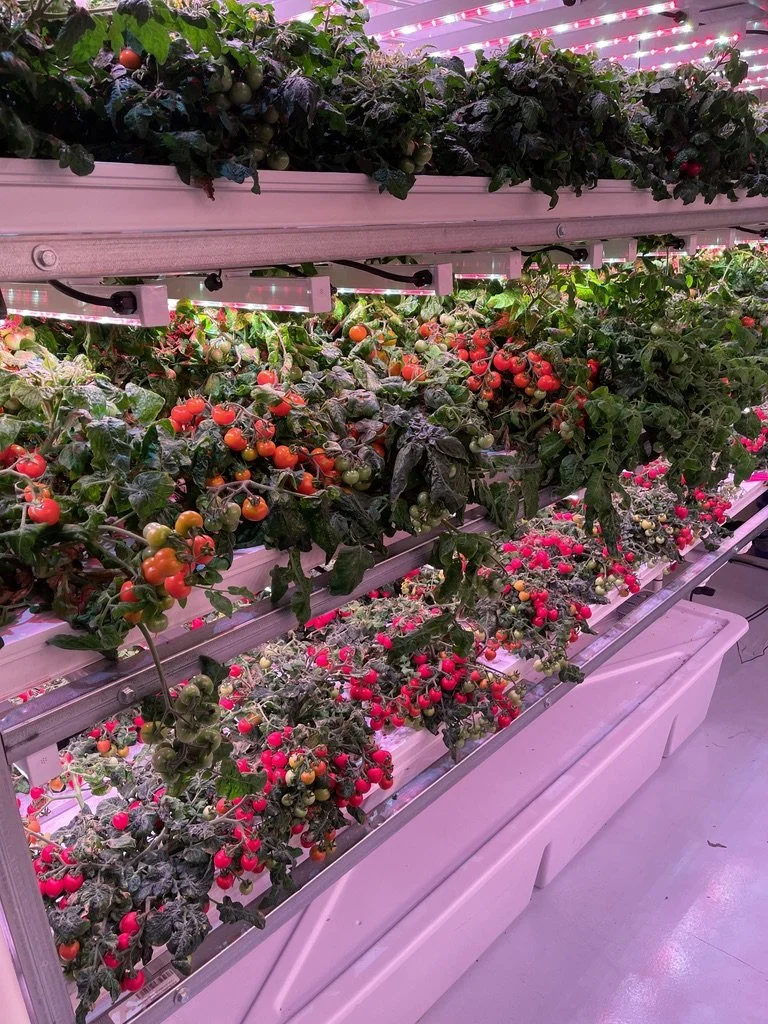
When I toured the CEA Innovation Center in Virginia last year, these compact tomato plants caught my attention.
They were producing fruit between closely spaced growing layers, in space typically associated with lettuce. To me, breeding crops for these height restrictions is one of the most valuable opportunities in controlled environment agriculture.
I don’t believe the second life of shuttered vertical farms will come from repeating the same business model that failed the first time. We need more crops that can fit into existing systems without requiring owners to rebuild the farm around them. These tomatoes show one possibility, although fitting on the shelf is only the beginning. Yield, labor, energy use, and customer demand still have to make the crop worth growing.
The opportunity becomes especially interesting in places like northern Canada, where extreme weather and difficult transportation can strengthen the case for completely indoor production. But if food security is the objective, we need to think beyond a reliable supply of lettuce. A broader range of vegetables, including crops that contribute more protein and fiber, would give these farms a more useful role in feeding their communities. These tomatoes don’t solve that entire challenge, but they demonstrate why breeding deserves more attention.
Before we build more shelves for lettuce, we should put more effort into developing what else can grow on them.